
ROBLES DEL RIO, Monterey County — October 30, 2026. A specific section of Esquiline Road, one of the approaches into the wooded Robles del Rio neighborhood, is identified in Monterey County's adopted traffic regulations as a 25-mile-per-hour speed zone. The description runs from Monterey County Bridge No. 508 south to the intersection with Calle De Los Ositos. This is a defined road segment, not a statement that every rural route in the Carmel Valley has the same posted speed limit.
The county also publishes a formal process through which residents can request speed humps on eligible residential streets. The important distinction is that a speed-limit designation already recorded in an ordinance and a request for a new physical traffic-calming device are two separate government decisions. No new hump, enforcement operation or road-construction date is confirmed for Esquiline Road in the public records reviewed for this article.
Where exactly is the 25-mph zone?
The county's speed-zone ordinance attachment describes Esquiline Road as leading into Robles del Rio and lists the section between Bridge No. 508 and Calle De Los Ositos at 25 mph. A previous county ordinance record uses the same description. Legal speed limits depend on the controlling current ordinance and signs on the road; drivers should follow posted controls, any lower temporary restrictions and safe driving speeds for actual conditions.
Some neighborhoods contain similarly named side roads and local access lanes, including De El Rio, Calle De Los Ositos, Southbank Road and Calle De La Ventana. The published Esquiline zone should not be generalized to every one of those streets without examining its own applicable traffic law.
When will Monterey County consider speed humps?
The County Traffic Engineering division publishes a procedure for a residential neighborhood to propose speed humps. The eligibility checklist includes a maximum of 1,500 vehicles per day, a road qualifying as a residential neighborhood under California Vehicle Code criteria, an ability to post a 25-mph limit and evidence that 67% of motorists exceed 25 mph. The county also requires no objections from relevant emergency-response services, the route not to be served by Monterey-Salinas Transit, and agreement from property owners where humps would be installed.
Those are cumulative screening conditions. An individual cannot assume a speed hump will be approved simply because cars seem to travel too fast, because a stretch has a 25-mph designation or because a neighboring town uses similar devices. Staff may require traffic measurements, a complete petition and review of drainage, emergency access and road classification.
What happens after neighbors submit a request?
The county's published process says staff first review eligibility. For a potentially eligible road, they may consult a neighborhood association or applicable County Service Area to gather comments before a decision. This does not make an HOA or the CSA 55 Robles Del Rio storm-drain district the sole authority to set speed limits or install traffic-control devices. The responsible traffic engineers and the county's legal process must be followed.
Residents considering a petition should identify the exact road section, note times when speeding appears common, collect observations without entering traffic and ask the county which forms and traffic data are required. A petition is a request for review, not an authorization for a homeowner to bolt a speed bump onto public pavement.
Why drainage and emergency access matter here
Robles del Rio sits in oak-covered hills with a limited road network. California58 has already reported separately on vegetation treatments and a proposed secondary evacuation route and on the CSA 55 drainage budget. Any proposal to change the roadway should take stormwater routing, emergency-vehicle movements and existing rights-of-way into account. None of those separate studies proves a new traffic-calming installation is currently funded or scheduled.
How to follow up
Residents should start with Monterey County Traffic Engineering for petition guidance and requests for a current traffic survey. For the legally defined Esquiline Road speed zone, consult the county speed-limit ordinance record. The California Department of Transportation's speed-limit guide explains how engineering-and-traffic surveys inform speed zones.
Primary-source service guide compiled October 30, 2026. No collision data, enforcement results, or proposed speed-hump work specific to Esquiline Road has been independently verified; the article does not claim a change in speed limits this week. Send correction records to California58 Newsroom.
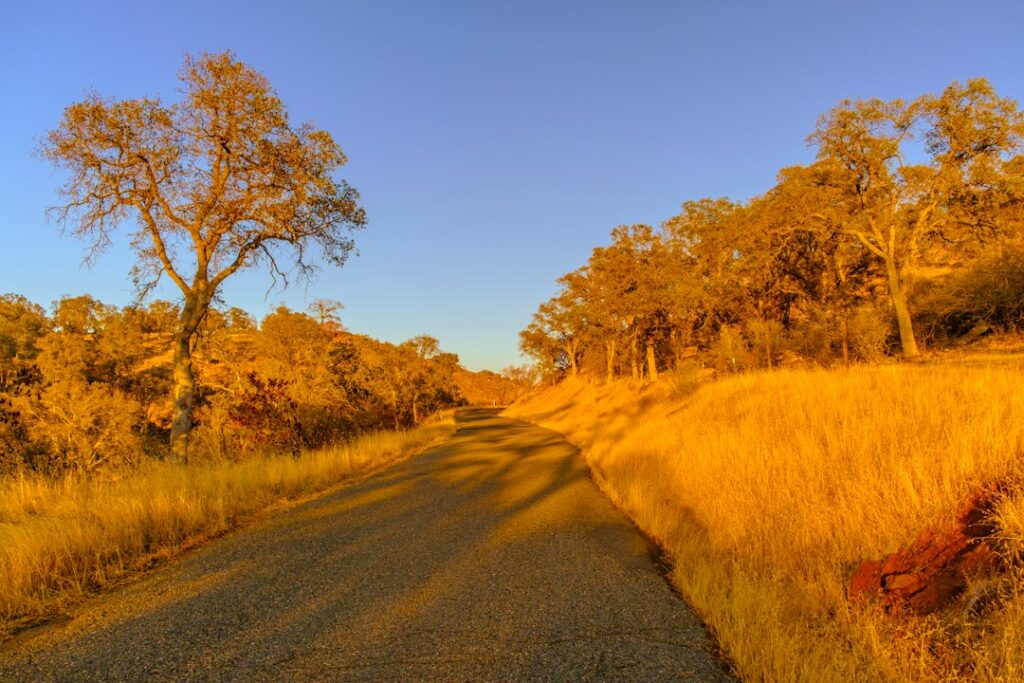
Featured photo: illustrative California road by Drei Kubik / Unsplash. Not a photograph of Esquiline Road, Robles del Rio, or an installed speed hump.
Support Robles del Rio News
Choose how to support Robles del Rio News:
Credit / Debit Card via StripeChoose your contribution amount on the secure California58 Stripe checkout. One-time support for independent local journalism.
Continue with PayPal Continue with ZelleZelle payments go to Vitaly Ataev Troshin. Please verify the recipient in your bank before sending. Availability depends on your bank.
Optional reader support. When possible, add “Robles del Rio News” to the payment note. Contributions are not advertised as tax-deductible. Support does not influence editorial decisions.More from Robles del Rio News
- Robles del Rio Drainage District’s 2026–27 Spending Plan Lists $60,152 Against $18,766 in Revenue →
- Robles del Rio Wildfire Planning: 35 Acres of Fuel Treatment and a 0.69-Mile Secondary Exit Concept →
- Robles del Rio Flood History: County Records 80 Homes Damaged in March 1995 and Explains Carmel River Risk →
- Robles del Rio Residents Can Track Carmel River Flood Stages at NOAA's RDRC1 Gauge →
СООБЩЕСТВО
Комментарии
Присоединяйтесь к обсуждению California58. Чтобы комментировать, необходимо войти в аккаунт.
Создайте бесплатный аккаунт California58 или войдите через доступную социальную сеть.